

According to The Business Research Company’s report Perimeter Security Global Market Report 2025, the market is forecast to grow strongly from 2025 onwards – expanding by 7.9 per cent this year, followed by a CAGR of 10.9 per cent through 2029. The Perimeter Security Global Market Report 2025 includes revenues earned from providing intrusion detection systems, threat identification, surveillance detection, pattern analysis, barrier systems, and professional security services.
Major trends
Growth during the forecast period can be attributed to the increasing demand for cyber-physical security integration, cloud-based solutions, scalable systems, and environmental sensors. Major trends include interoperability and integration, predictive maintenance, energy efficiency and sustainability, mobile integration and control, as well as environmental sensors and anomaly detection, according to the report.
Market drivers
The increasing threat of terrorism and cross-border intrusions is expected to propel the growth of the perimeter security market going forward. Cross-border intrusions refer to the movement of a unit, force, or military asset into another country’s designated operational area, territorial waters, or airspace for surveillance or intelligence gathering. These threats are rising as various countries and groups seek to gain power and fulfil their demands. Perimeter security serves as the first line of defence in securing critical assets, information, and people through the use of cutting-edge technology, the report stresses.
Critical infrastructure
According to MarketsandMarkets, the physical security segment accounts for the largest share of the critical infrastructure security market. The dominance of this segment is attributed to the increasing need to safeguard facilities, personnel, and assets against physical threats such as intrusions, theft, and terrorist activities.
Increasing urbanization
According to The Business Research Company’s report, increasing urbanisation is also expected to propel the growth of the perimeter security market going forward. Urbanisation refers to the process by which rural areas become urbanized as a result of economic development and industrialisation. Perimeter security enhances safety by establishing protective boundaries and utilising technologies such as sensors and surveillance systems to monitor and control access to urban areas.
Mix of technologies
Perimeter security is often described as a multi-layered system – much like the layers of an onion. Each layer may require different technical solutions, and the need for comprehensive, multi-tier perimeter protection has grown significantly. There is no single solution that fits all applications. In many cases, effective perimeter security combines high-quality sensors that deliver reliable data with video surveillance systems that can verify and confirm events.
Laser, lidar, thermal sensors, fence-mounted sensors, infrared sensors, integrated fibre-optic perimeter intrusion detection systems, and perimeter fence detection systems can be used to detect people or objects approaching or breaching the perimeter. Cameras with video analytics can generate information about an object’s location, speed, and trajectory; moving targets can be classified as, for example, a person, car, or truck, and used to visually verify what other technologies have detected.
More effective detection with AI
The integration of AI and machine-learning technologies is enhancing market potential, making security systems more adaptable and effective in threat detection and response. AI and machine learning also enable systems to differentiate between genuine threats and false alarms with greater accuracy. As a result, response times are faster, and overall security is more robust.
Anti-drone systems
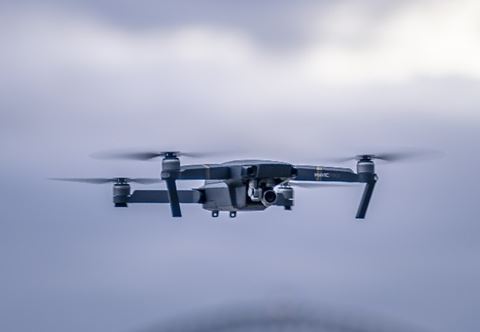
With the introduction of drones, perimeter protection has become three-dimensional – threats can now also come from the air. This issue has become even more relevant during the war in Ukraine, and in recent months, countries such as Poland, Denmark, and Norway have reported problems with unidentified drones flying over airports and other critical infrastructure.
The global anti-drone market is growing rapidly, with an expected CAGR of 26.5 per cent from 2025 to 2030, primarily driven by escalating security concerns over the unauthorised and potentially malicious use of drones across military, critical infrastructure, and public spaces.























 Sverige