

By now most people are aware of the various ways network audio can be used to bring value to different environments. This could be prerecorded announcements reminding commuters of safety procedures on train stations, messages to shoppers about the latest discounts, or even reassuring students that help is on the way following an incident on a school or university campus. However, Axis Communications emphasises there are just as strong and impactful use cases for audio in critical infrastructure and industrial plants.
Differences between network audio and traditional systems
Network speakers are all-in-one audio systems, 100 per cent IP end points and connect to the standard network, which makes installation, configuration and management simple – without the need for dedicated audio cabling. You only need a single cable for both power and connectivity. Without physical speaker wiring (circuits) there is less risk of complications when trying to identify an issue. In a network audio system, every individual speaker is addressable and monitored over the network. This means, end users can use IP based health monitoring and configuration of the complete system. If there is a problem, there is an easy way to find out and have the tools to take immediate action.
Jimmy Ek says: “Your operators can remotely monitor the entire system more efficiently and quickly identify and address any issues which arise, resulting in a system you know works as intended. In turn, this helps reduce downtime and improves solution efficiency, positively contributing to your business’ success.”
A surveillance system can be set up to activate a pre-recorded message when it detects indications of undesirable activity. Additionally, it can be configured to trigger alerts that tell operators to visually assess a situation and then speak directly to the individuals involved via the speakers. Network audio solutions can also be set up to divide premises into zones. Instead of broadcasting a message to all areas, messages can be tailored depending on the location. This is all handled within the audio management software.
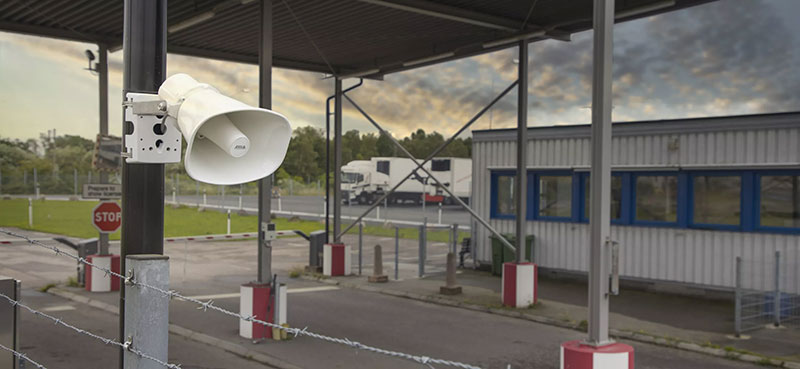
Defending the perimeter against intrusion
According to Axis Communications, audio solutions are only one part of the arsenal implemented to ensure the security of a critical site: Network cameras equipped with analytics also play an important role in spotting and investigating adverse activity, but audio can support by actively deterring intruders’ intent on causing damage or theft.
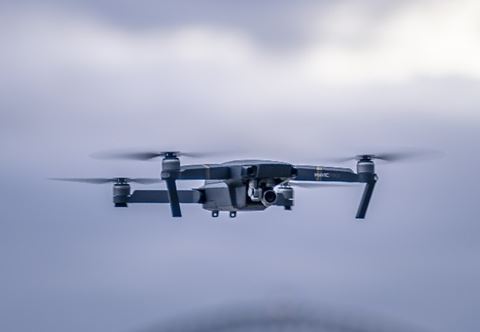
Jimmy Ek says: ”Thermal cameras equipped with analytics spot intruders as soon as they enter the scene. A horn speaker is triggered to play a prerecorded message warning the perpetrators that law enforcement is on the way, causing them to retreat. As a result, damage to company property has been avoided, saving not only money and time, but also ensuring production continuity.”
Audio helps enhance operational efficiency
Although intrusion deterrence is a main use case for audio, there are other areas within the industrial environment which can also benefit, Jimmy Ek stresses.
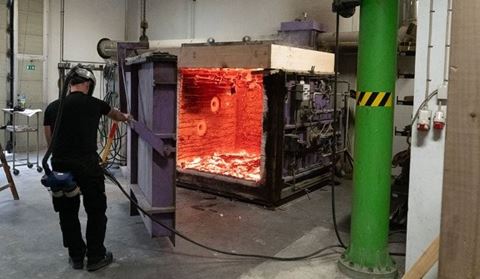
“For example, minimizing disruption to your production line is crucial to ensuring that there are no delays in delivering products to customers. You can use audio solutions, such as voice messages to notify relevant staff of overheating or malfunctioning equipment or process errors like jammed products on conveyor belts, enabling them to quickly intervene”, he says.
If the environment is noisy, it can be hard to hear speaker messages; in these cases a strobe siren could act as a visual alert to notify staff that an anomaly has been detected.
Jimmy Ek says: “Adding audio to your toolkit ultimately means less unwanted downtime, more efficient and ongoing production processes and less material loss.”
Minimizing incidents by supporting safety procedures
Maintaining the safety of workers in an industrial environment is an absolute priority, with every process and area closely evaluated to identify and minimize risks. Even trained and experienced personnel can be involved in accidents, and according to Axis Communications, the use of network audio can help remind the workforce of safety procedures.
“For example, you can set automated messages to alert people that they are entering restricted or dangerous areas after they have been detected by a camera equipped with intelligent analytics. This quick intervention can make all the difference by avoiding accidents, supporting workers’ health and reducing downtime”, Jimmy Ek says.
Also, health and safety reminders, such as wearing the correct PPE can ensure that their health is being prioritised.
Complement the certified evacuation system
However, accidents and emergencies do occur in industrial sites, and these can have disastrous consequences. The main priority is evacuating all personnel to safety as quickly as possible, and surveillance technology can be useful in these critical situations, Axis Communications stresses. A combination of speakers and cameras can be valuable in assessing the situation while broadcasting live or prerecorded messages to support the evacuation efforts, where permitted.
Jimmy Ek says: “This offers the agility needed to guide personnel if the situation changes or rapidly declines, improving efficiencies and potentially saving lives. However, it should be noted that these systems act to complement the certified evacuation system in place.”
Network audio adds value
Considering the complexity of industrial environments, Axis Communications believes network audio solutions can be used to bolster security, streamline processes, improve efficiencies and ensure worker well-being.
“Ultimately, the beauty of this solution lies in its functionality in a variety of scenarios eliminating the need for compromise or investment in separate system”, Jimmy Ek concludes.





























 Sverige